


ACM Workshop on Wireless Security and Machine Learning (WiseML) 2026
The ACM Workshop on Wireless Security and Machine Learning (WiseML) 2026 will be held in conjunction with the ACM Conference on Security and Privacy in Wireless and Mobile Networks (WiSec) 2026. Accepted, registered, and presented papers will appear in the ACM digital library.
Scope and background
Machine learning (ML) has emerged as a powerful tool for analyzing spectrum data and for developing efficient and secure solutions for the IoT, CPS, 5G, NextG, SatCom, and other emerging wireless systems. On the other hand, adversarial machine learning techniques can severely compromise the performance of ML-enabled wireless systems, highlighting an urgent need to better understand and mitigate the impact of adversarial machine learning on wireless technologies.
Developing efficient, robust, and resilient ML algorithms for wireless security is therefore essential, particularly in environments constrained by limited power and computational resources. Such advances are critical to ensuring the integrity, reliability, and trustworthiness of wireless communications. As a result, there is a growing demand for research at the intersection of ML, wireless security, privacy, and robustness to effectively address these challenges.
WiseML aims to bring together researchers and practitioners from the ML, security, privacy, wireless communications, and networking communities worldwide. The workshop will serve as a collaborative forum for presenting cutting-edge research, exchanging ideas, and fostering interdisciplinary partnerships to push the boundaries of knowledge in these important and rapidly evolving areas.
Topics of Interest (but not limited to)
Adversarial ML Techniques
- Adversarial examples
- Adversarial reinforcement learning
- Defense techniques
- Generative adversarial learning
- Poisoning attacks
- Smart jamming, spoofing, and mitigation
- Trojan/backdoor attacks
Privacy & Security Issues of ML Solutions
- Anonymity
- Differential privacy and alternative privacy models
- Generative AI (GenAI) security
- Information-theoretic security and privacy
- Large language models (LLM) security
- Membership inference attacks
- Model inversion
- Model extraction
- Machine unlearning
- Physical layer privacy
- Privacy-preserving learning
- Secure learning
ML Applications
- 5G/NextG/cloud security
- Access control
- Agentic AI
- Covert communications
- Device identification/ RF fingerprinting
- Digital twin security
- Explainable ML for trusted security
- Integrated sensing and communication (ISAC) security
- Intrusion detection
- Localization
- Wireless sensing
- Network virtualization
- O-RAN security
- Security for mobile autonomous multi-agent platforms
- Semantic and task-oriented communications
Strengthening ML Solutions
- Authentication
- Certified defense
- Correcting for model or data drift
- Cyber-physical systems/IoT
- Data augmentation
- Efficient and edge deployable solutions
- Embedded computing
- Experiments and testbeds
- Federated learning
- Hardware solutions
- Information discovery
- Lifelong learning
- Uncertainty quantification
- Wireless datasets
Workshop Chairs
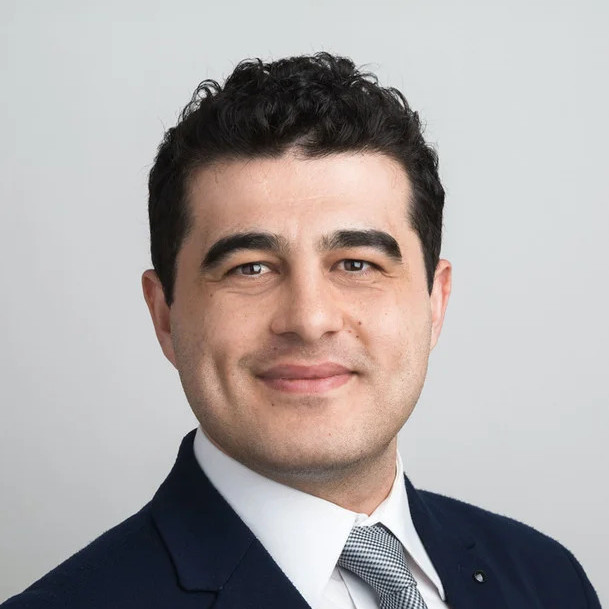
Onur Günlü

Yalin Sagduyu
Gaithersburg, MD, USA

Yi Shi
Arlington, VA, USA

Junqing Zhang
Steering Committee
- Dr. Wenjing Lou, Virginia Tech, VA, USA
- Dr. Sennur Ulukus, University of Maryland, MD, USA
- Dr. K.P. (Suba) Subbalakshmi, Stevens Institute of Technology, NJ, USA
- Dr. Aylin Yener, The Ohio State University, OH, USA
Technical Program Committee (TPC) Members:
- Marco Baldi (Universita Politecnica delle Marche, Italy)
- Eyuphan Bulut (Virginia Commonwealth University, USA)
- Asaf Cohen (Ben-Gurion University, Israel)
- M. Cenk Gursoy (Syracuse University, USA)
- Jacek Kibilda (Virginia Tech, USA)
- Burak Kantarci (University of Ottawa, Canada)
- Zhuo Lu (University of South Florida, USA)
- Javier Parra-Arnau (Universitat Politècnica de Catalunya, Spain)
- Stjepan Picek (Radboud University, Netherlands)
- Danda B. Rawat (Howard University, Washington D.C, USA)
- Heejun Roh (Inha University, Korea)
- Rafael Schaefer (TU Dresden, Germany)
- Savio Sciancalepore (Eindhoven University of Technology (TU/e))
- Guanxiong Shen (Southeast University, China)
- Sachin Shetty (Old Dominion University, USA)
- Maciej Skorski (Czech Technical University in Prague, Czech Republic)
- Ayse Ünsal (EURECOM, France)
- Ning Wang (University of South Florida, USA)
- Xuyu Wang (Florida International University, Miami, FL, USA)
- Youlong Wu (ShanghaiTech, China)
- Ning Xie (Shenzhen University, China)
- Feng Ye (University of Wisconsin-Madison, USA)
- Kai Zeng (George Mason University, USA)
Submission Guidelines
Submission site: https://wiseml26.hotcrp.com/.
Workshop papers should be written in English, must be formatted in the standard ACM conference style, and are not to exceed six pages. Accepted papers will appear in the ACM digital library.
Only PDF files will be accepted for the review process. All papers must be thoroughly anonymized for double-blind reviewing.
Important Dates:
- Paper Submission Deadline: March 15, 2026
- Acceptance Notification: April 9, 2026
- Camera-Ready Paper Submission: April 30, 2026
- Workshop Event: July 3, 2026


